Advice Is Not Therapy: The Iranian Dr. Phil Problem
Dr. Farhang Holakouee is a well-known Persian Marriage and Family Therapist, American radio personality, sociologist, and economist who has spent decades hosting live call-in programs for the Persian-speaking community. Through these shows, Persian listeners from around the world call in for psychological and relationship advice on marriage, family, and cultural conflicts. Often compared to a Persian version of Dr. Phil, his voice has shaped how mental health and personal struggles are discussed in the community.
I remember when he first started his show, and as a child, I never liked him; his voice gave me the throw-up effects. Now, with a psychodynamic and clinical perspective, I’m revisiting several specific calls to examine where personal advice crosses into professional mis-attunement, and how failing to listen—while jumping to conclusions and projecting one’s own narrative—can cause real psychological harm.
Call #6210
This case involves a woman in her early 50s who called into a public advice program seeking guidance after leaving a long-term abusive marriage.
She is approximately 50 years old. Her former husband is approximately 51 years old. They were married for about 25 years and have a 15-year-old son, born in the United States. The family left Iran in 2007–2008; the husband immigrated first in 2007, and she followed in 2008.
The woman reports a long history of emotional and physical abuse throughout the marriage. She describes her former husband as having severe anger issues, being highly influenced by others’ opinions, and coming from a traditional family background in which violence against women was normalized. She states that while living in Iran, people explicitly encouraged him to hit her as a way to control or “correct” her.
She reports that the abuse did not stop after immigrating to the United States. Despite hoping that a change in environment might help, the pattern persisted. She also reports that their son was exposed to domestic conflict. At one point in the conversation, she states that her son witnessed a serious altercation in 2004. Given that her son is currently 15 years old, this appears to be a timeline inconsistency, and it is likely she meant 2024. No clarifying question was asked to explore this discrepancy or to understand what the child witnessed or how it affected him.
In the later years of the marriage, particularly around 2023, she reports that her husband’s behavior worsened. She describes emotional withdrawal, not coming home, behaving like a bachelor, and sitting separately from her when they traveled together. She also states that he explicitly told her to “go get a boyfriend.” She ultimately obtained an American divorce.
Her Reason For the Call
The woman was calling for two very specific reasons:
1. Confusion After Being Blamed
She explains that two women approached her and told her that her husband was cheating. In response, her husband blamed her and repeatedly told her that she should never have listened to anyone else.
Her question is not dramatic or irrational. It is simple and painful:
Was I wrong to listen?
Should I not have trusted anyone else?
Is this my fault?
This is a woman struggling with internalized blame after years of emotional manipulation.
2. The Return of Abusive Memories
Her second concern is that memories of the abuse are returning involuntarily. She describes intrusive images, emotional flooding, and physical reactions in her body. She repeatedly says she does not want to think about these memories, but they come up on their own, and she does not know how to stop them.
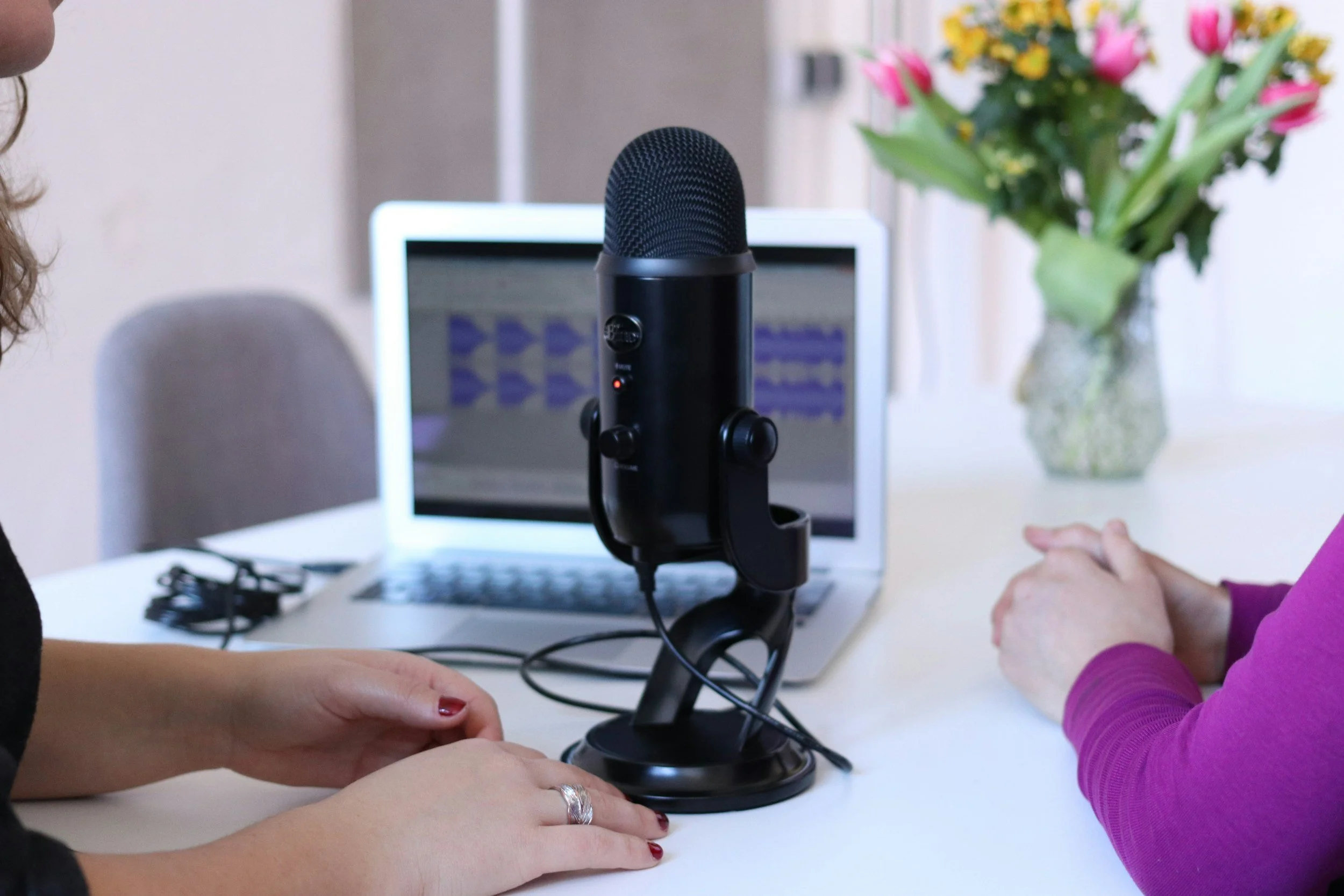
Holding a microphone — or a doctorate — doesn’t guarantee understanding.
She reports difficulty watching movies, overwhelming emotional reactions, and confusion about why this is happening now.
This is not intentional rumination.
This is trauma recall.
What Happened During the Call
Throughout the conversation, she attempts to explain her experience. Repeatedly, she is interrupted before finishing her sentences. Rather than being asked clarifying questions, she is redirected toward advice about forgetting, staying busy, and not thinking.
At no point is there a meaningful exploration of:
the severity and duration of the abuse
the role of blame and gaslighting
the child’s exposure to violence
the nature of her intrusive memories
whether her symptoms reflect trauma or PTSD
Instead, the speaker repeatedly compares his own experiences to hers.
The Fundamental Error: Comparison Without Context
This is where the advice becomes especially harmful.
This man—who has likely lived in the United States for decades, who was educated in both the American and Iranian systems, who is in his 80s—keeps comparing his psychological experience to hers.
He repeatedly references himself:
how he forgets things
how his family is impressed by how much he’s forgotten
how he fills his life
how he doesn’t spend time thinking
He never accounts for:
her gender (being a woman who was raised in a country that oppress woman, for being a woman)
her personality
the society she was raised in
the legal system she lived under
the power dynamics she survived
or the psychological cost of long-term abuse
Different people have different psychological structures. Different nervous systems. Different developmental histories. Therapy does not work by saying, “This is what I can do, so you should too.”
That is not therapy.
That is projection.
The Layer He Completely Missed: Growing Up as a Woman in Iran
This woman spent the first half of her life in Iran.
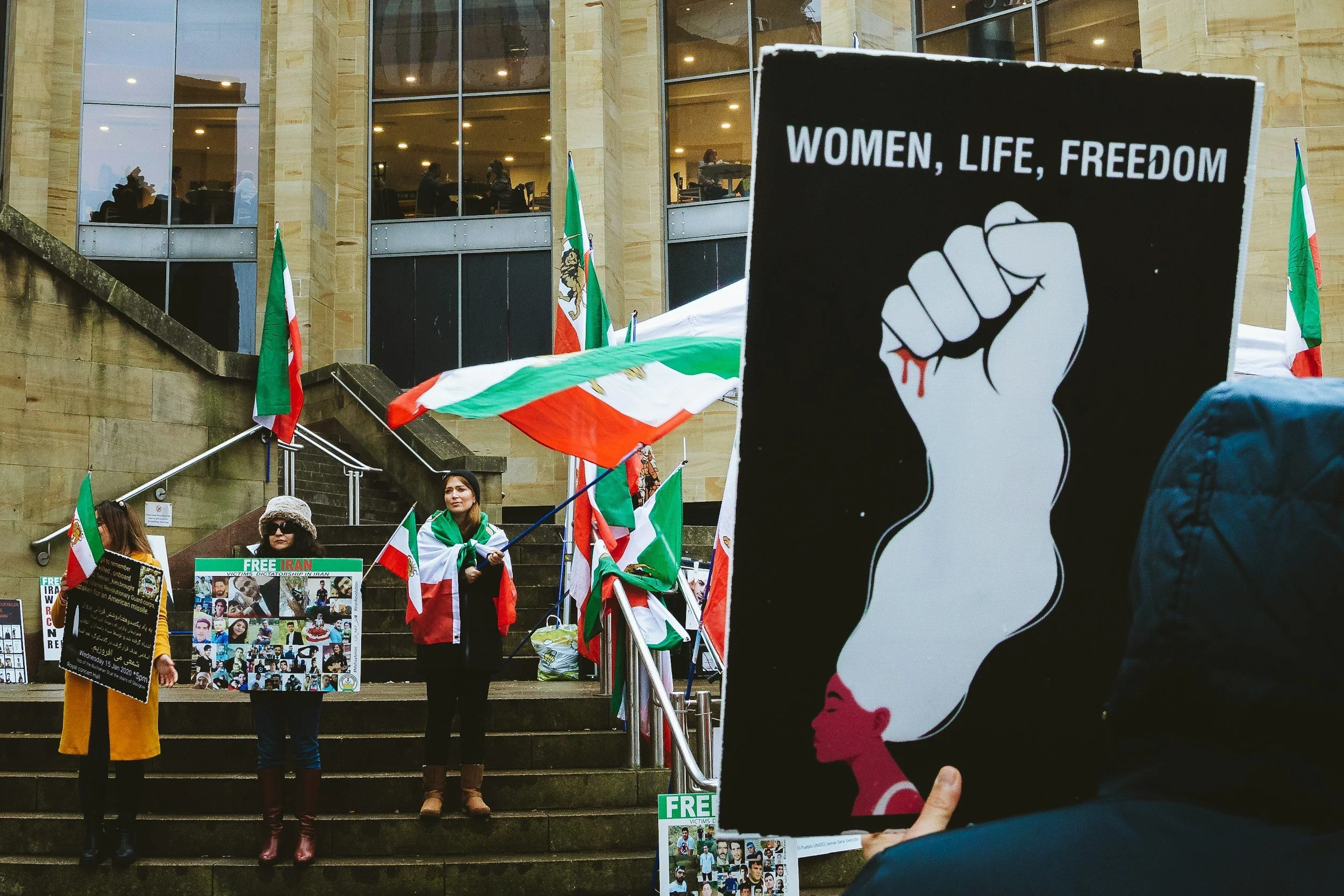
The “Woman, Life, Freedom” movement made global headlines, yet the psychological cost carried by women—and the lack of appropriate support when they seek help—remains largely unaddressed.
She is around 50 years old, which means she witnessed the Islamic regime change as a child. She was about three years old when the regime took over. By the time she entered first grade, she was already being forced to cover her hair.
From childhood, her body was regulated.
Her choices were regulated.
Her autonomy was regulated.
She did not grow up being told she was “less than.”
She grew up in a system that legally treated her as less than.
In Iran:
women cannot easily divorce
men control permission to leave the country
Domestic violence is not safely reportable; there’s no place to report it. LIKELY LITERALLY NO PLACE!
family systems often reinforce silence
She even states that his own family encouraged the abuse.
So when he reinforces and tells her:
“You should have known better.”
“You shouldn’t have stayed.”
“You shouldn’t have married him.”
This ignores the reality that she was raised in a system that never gave her a real choice to begin with.
Why “Just Forget It” Is Re-Traumatizing
Telling a survivor of long-term abuse to forget is advice, NOT THERAPY.
It erases:
her history
her lack of legal protection
her conditioning
her survival
Trauma often resurfaces after safety, not during danger. While living in abuse, the nervous system suppresses emotion to survive. When safety finally arrives, the body releases what it could not process before.
That is why memories return.
That is why images surface.
That is why the body reacts.
Nothing is wrong with her. And remember body keep scores, and this woman repeated that she was physically and emotionally abused by her husband, so she witnessed a lot of traumatizing moments.
The Cost of Being Unheard
I would bet my license that after this call, this woman felt worse, not better.
Likely thoughts:
Why can’t I forget as he can?
What’s wrong with me?
Why am I still struggling?
I must be weak or stupid.
This is how people end up over-pathologized.
This is how people end up medicated instead of understood.
Not because they are broken—but because they were never heard. They were never given the direction to heal, the space to heal, or a chance to be heard and understood.
What Therapy Actually Requires
Yes, therapists share stories—but only when it serves the client.
Self-disclosure is meant to:

Therapy requires restraint, attunement, and intention—self-disclosure is meant to serve the client, not compete with, overshadow, or diminish their experience.
reduce shame
normalize experience
support growth
create a connection to help the client process emotions
education on the cycle of abuse
Not to:
compare
compete
dominate
or diminish
This woman did not need to hear how well someone else forgets.
She needed:
education about trauma
validation of her experience
a space to speak without interruption
assessment for PTSD
trauma-informed, culturally aware care
body-based support to help her nervous system settle
Healing comes from integration, not erasure.
Final Thought
This conversation is critical given what is happening in Iran right now.
This video was posted around January 19, 2025, and was likely recorded shortly before that. Whether it aired on the 18th or 19th is less important than the context in which it exists. The Persian community is living through an intense and destabilizing moment—one centered on women’s rights, freedom, safety, and dignity. Anxiety is high. Fear is high. Collective trauma is being reactivated.
This is where psychology comes in.
When people are exposed to ongoing political violence, repression, and injustice—especially when it mirrors their own past experiences—the nervous system goes on alert. This is when flashbacks intensify, memories resurface, and unresolved trauma comes back online. Our rational mind does not function the same way under threat. The body remembers. The body keeps score.
That is why it is especially heartbreaking, in this moment, that a society—emotionally, physically, and psychologically abused—is turning to this platform for support and being told to forget. Men and women alike are reaching out during a period of heightened fear, yet the response they receive is “forget it,” in other words, repression. And repression is one of the primary drivers of long-term psychological suffering.
This woman’s story is not separate from what is happening now. It is directly connected. Her pain, her confusion, her memories, and her distress exist within a larger historical and cultural wound—one that is currently being reopened for millions of Persian men and women around the world.
Right now is a critical moment for therapists, psychologists, and public figures who speak into the community. This is when people need containment, validation, education, and psychological safety. This is when professionals are called to help people understand their reactions—not silence them.
Telling trauma survivors to forget, especially in a moment of heightened collective fear, does not provide relief. It deepens shame. It reinforces self-blame. And it leaves people feeling broken for responding normally to abnormal conditions.
At times like this, how we show up counts.
Advice that dismisses pain, ignores context, and bypasses trauma does not just miss the moment—it fails the people who are most vulnerable in it.